
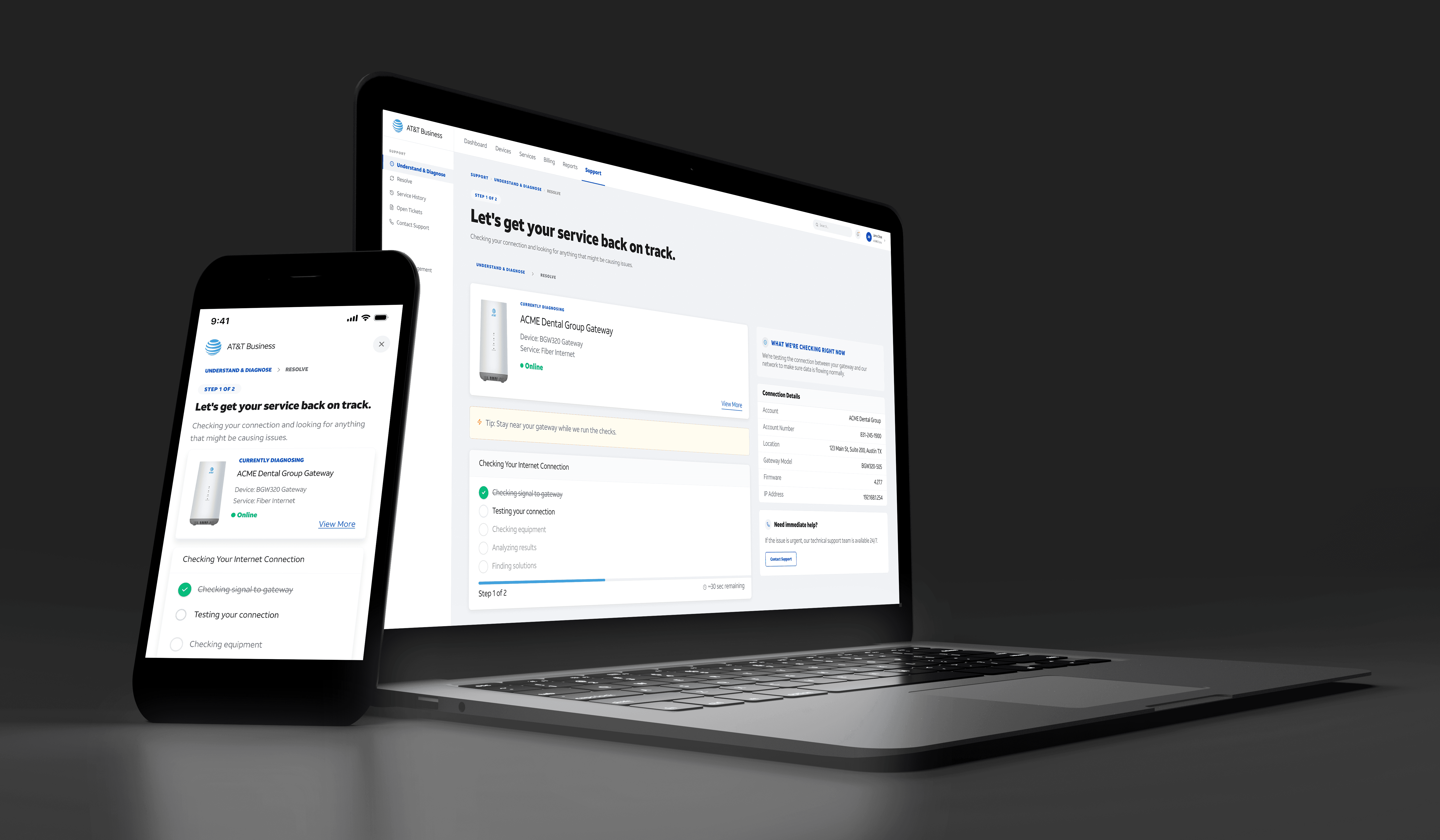
As AT&T Business partnered with ServiceNow to modernize Incident Management, I led the research, experience design, and high-level solution architecture for an AI-assisted troubleshooting framework.
What began as redesigning a troubleshooting flow evolved into defining reusable patterns for AI guidance, knowledge delivery, and connected support.
01
PROJECT OVERVIEW
Troubleshooting technical issues as a customer is already stressful.
The existing diagnostic experience often made that stress worse for AT&T Business customers.
The ambition extended far beyond launching another chatbot. The team needed a scalable framework that could connect diagnostics, knowledge articles, AI assistance, and customer support into a cohesive experience.
At the same time, AT&T's troubleshooting experiences spanned multiple products, brands, and support channels, leading many customers to abandon troubleshooting and contact support directly.
My Role
I led the research, experience design, and high-level solution architecture for the new troubleshooting framework, partnering with Product, Engineering, ServiceNow stakeholders, researchers, and technical SMEs to shape both the customer experience and the foundation for future support experiences.
Deals Page - Before

02
APPROACH & USER RESEARCH
The team's initial hypothesis was that improving AI and diagnostic capabilities would increase self-service adoption.
Before fully incorporating AI though, I wanted to understand why customers weren't using self-service.
RESEARCH METHODS
Customer interviews
Internal agent interviews
Journey mapping
Technical documentation audits
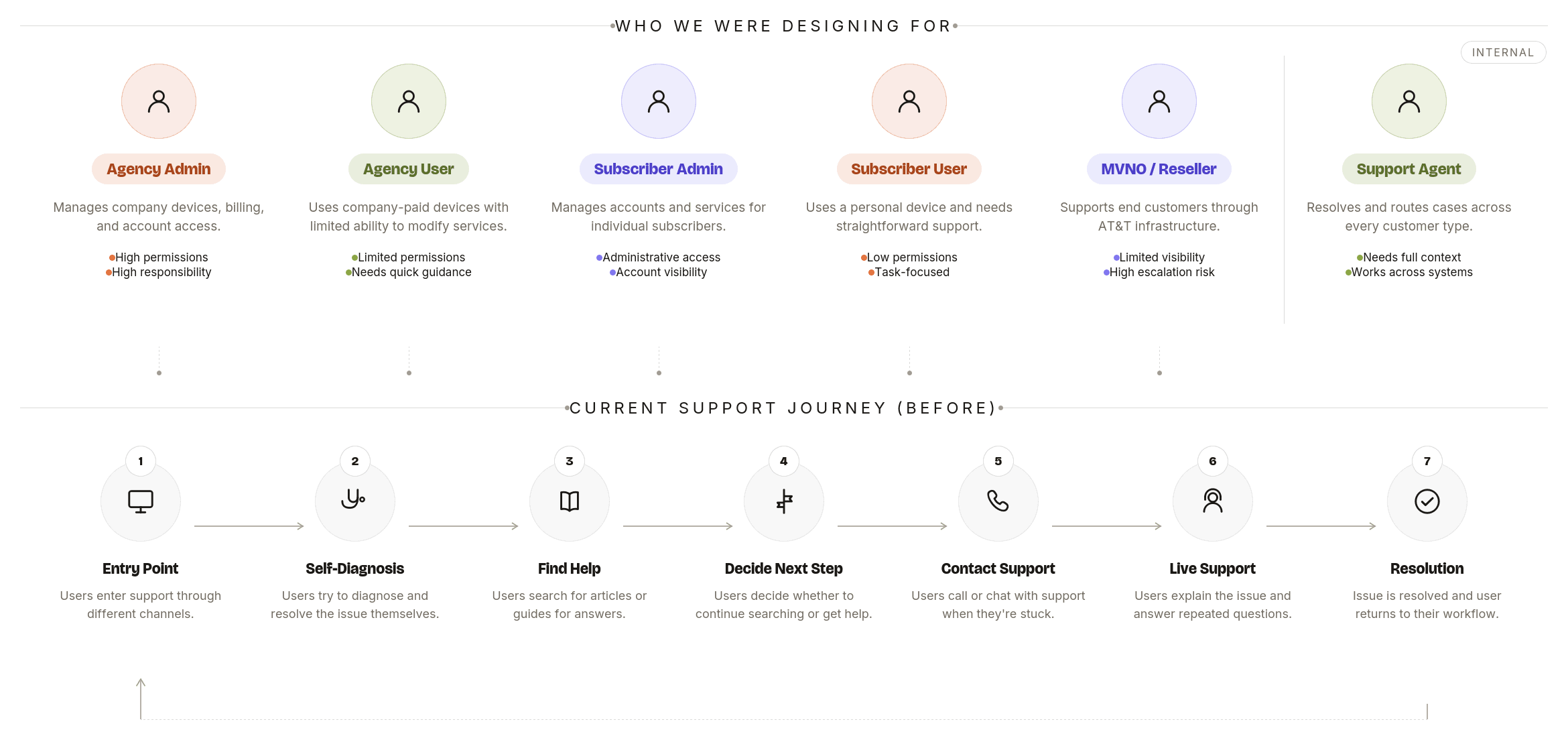
After thorough user research, my hypothesis shifted. AI wasn't enough. The problem wasn't intelligence. It was trust.
Confusing Troubleshooting Experience


Confusing diagnosis + technical documentation
Agent does not have enough context, back and forth
repeatedly
User tries self-service troubleshooting
Customer decides to call live support, which is expensive to AT&T
Fragmented Live support Experience

Customer Journey
03
THE CHALLENGE
Customers didn't abandon troubleshooting because recommendations were inaccurate.
They abandoned it because they couldn't understand what the system was doing, why it was asking certain questions, or whether it was actually helping. That insight completely changed the direction.
Trust matters more than accuracy.
Every dead end reduced confidence in self-service, increasing live support volume and operational costs.
Invisible Progress
Users couldn't tell whether diagnostics were actually running, creating uncertainty during long wait states.
Technical Guidance
Help content was inconsistent, highly technical, and difficult to discover, making self-service unreliable.
Disconnected Support
When self-service failed, agents inherited incomplete context, forcing customers to repeat information and restart troubleshooting.
04
THE PIVOT
I Stopped Designing solely AI.
I Started Designing Trust.
Research revealed that the real challenge wasn't AI capability - it was a lack of trust in the self-service experience.
Instead of asking,
How might AI improve troubleshooting?
I asked,
How might AI help customers feel confident enough in the experience to solve problems themselves?
That shift repositioned AI from the centerpiece of the experience to one component within a broader support ecosystem.

New Design Framework

05
Design Patterns
Content
Content
Content
Designing a Framework for Trust
Instead of iterating on a single interface, I explored multiple concepts that worked together to build confidence throughout the troubleshooting journey.
Visibility
Making system activity understandable through progress indicators, wait states, and feedback loops.
Show clear progress and what's happening

Do
Avoid indefinite waiting

DoN'T
Knowledge in Context
Surfacing relevant documentation inside the troubleshooting journey instead of sending users to a separate knowledge base.
Deliver the right help, in the flow

Do
Avoid context switching

DoN'T
AI-Assisted Guidance
Providing intelligent recommendations with reasoning and next steps that feel actionable and trustworthy.
Provide relevant, transparent guidance

Do
Avoid generic, low-value suggestions

DoN'T
Escalation & Handoff
Ensuring a seamless transition to human support with full context and history preserved.
Pass context and history to the agent

Do
Avoid starting over
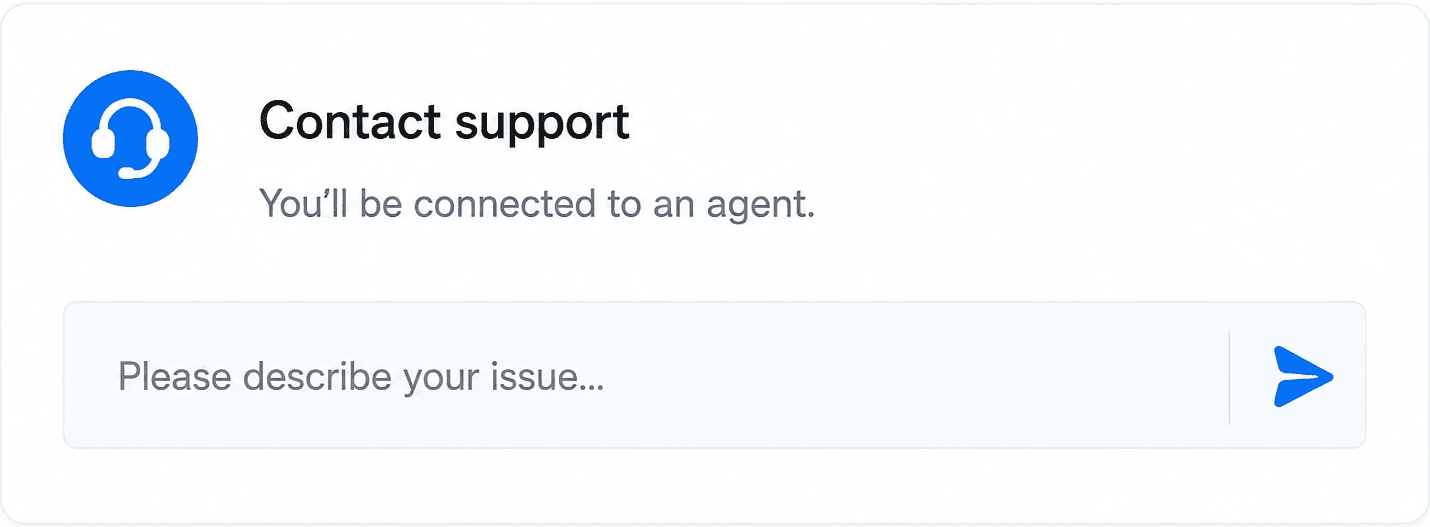
DoN'T
Trust at Every Step
Building confidence through clarity, consistency, and transparency at every moment of the journey.
Be clear, honest and actionable
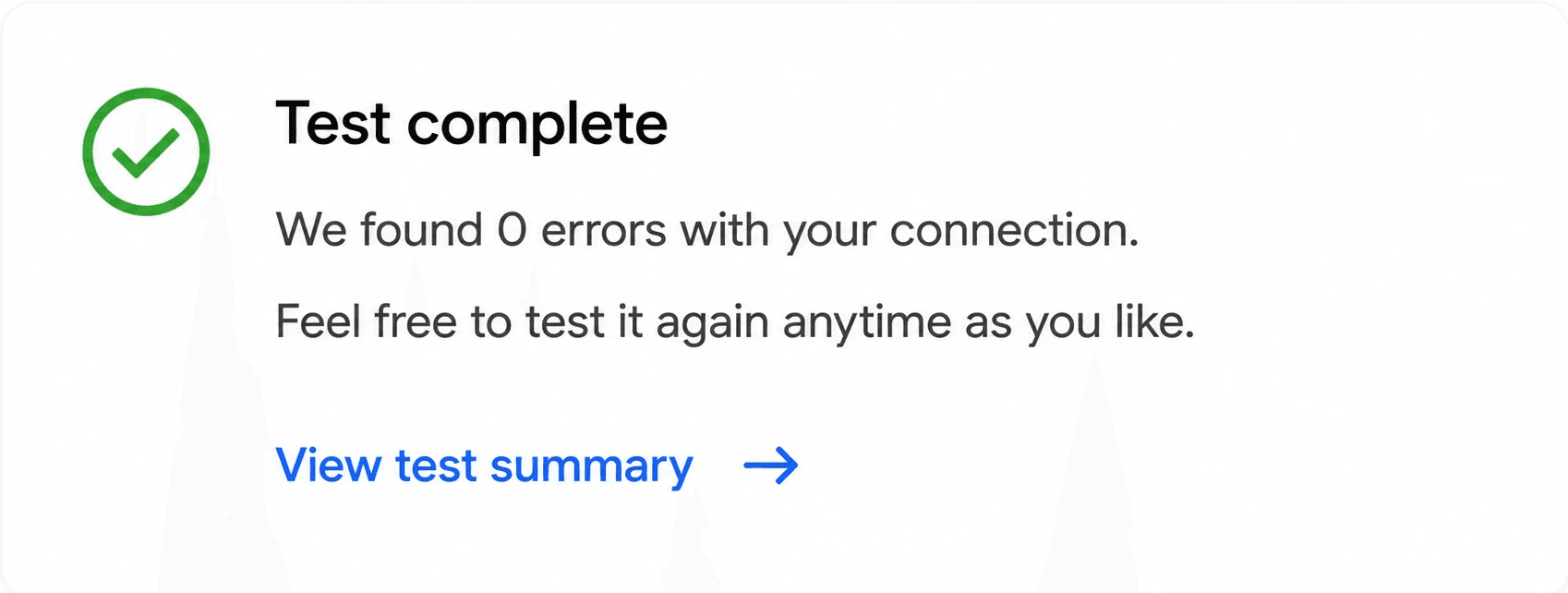
Do
Avoid ambiguous outcomes

DoN'T
06
RESULTS
Building the Foundation for AI-Assisted Support
The project evolved beyond improving a single troubleshooting flow.
It established a reusable design system that informed AT&T Business's emerging Incident Management ecosystem within ServiceNow.

Before
No visibility into what system is doing
Users had to leave the flow to find help
Generic guidance
After


BY THE NUMBERS
5-7%
Reduction in unnecessary live support escalation escalations.
Potential annual savings of $1.2M - $2.4M at enterprise scale
10-20%
Reduction in diagnostic time
Faster issue resolution and less customer friction
20-30%
Increase in customer confidence
Based on early usability testing and sentiment data
Project impact based on benchmark data, early usability testing, and stakeholder input. Actual results will be measures as experience scales
07
WHAT'S NEXT
A foundation for enterprise AI
This framework was intentionally designed to evolve alongside AT&T Business's growing AI capabilities.
Future iterations could shift from helping customers resolve issues to anticipating them before they interrupt business operations.
Future opportunities
1
2
3
4
Adaptive Guidance
How much guidance should users receive before it becomes distracting?
Confidence Signals
How can the interface communicate uncertainty without reducing trust?
Human Handoff
What information actually helps support agents continue the conversation seamlessly?
Platform Consistency
How can these interaction patterns scale across additional ServiceNow workflows and / or AT&T Business products?
08
REFLECTION
AI doesn't inherently create trust.
Good experiences do.
This project changed the way I think about AI in product design.
The biggest challenge wasn't making AI smarter.
It was understanding where AI added value, and where thoughtful interaction design, clear communication, and human-centered content mattered more.
By designing AI as a guide rather than the destination, we created a framework that customers could understand, teams could scale, and future products could build upon.


