
AT&T Business - AI Incident Management
As AT&T Business partnered with ServiceNow to modernize Incident Management, I led the research, experience design, and high-level solution architecture for an AI-assisted troubleshooting framework.
What began as redesigning a troubleshooting flow evolved into defining reusable patterns for AI guidance, knowledge delivery, and connected support.
Impact
XX
Timeline
8 months
Role
Senior Product Designer
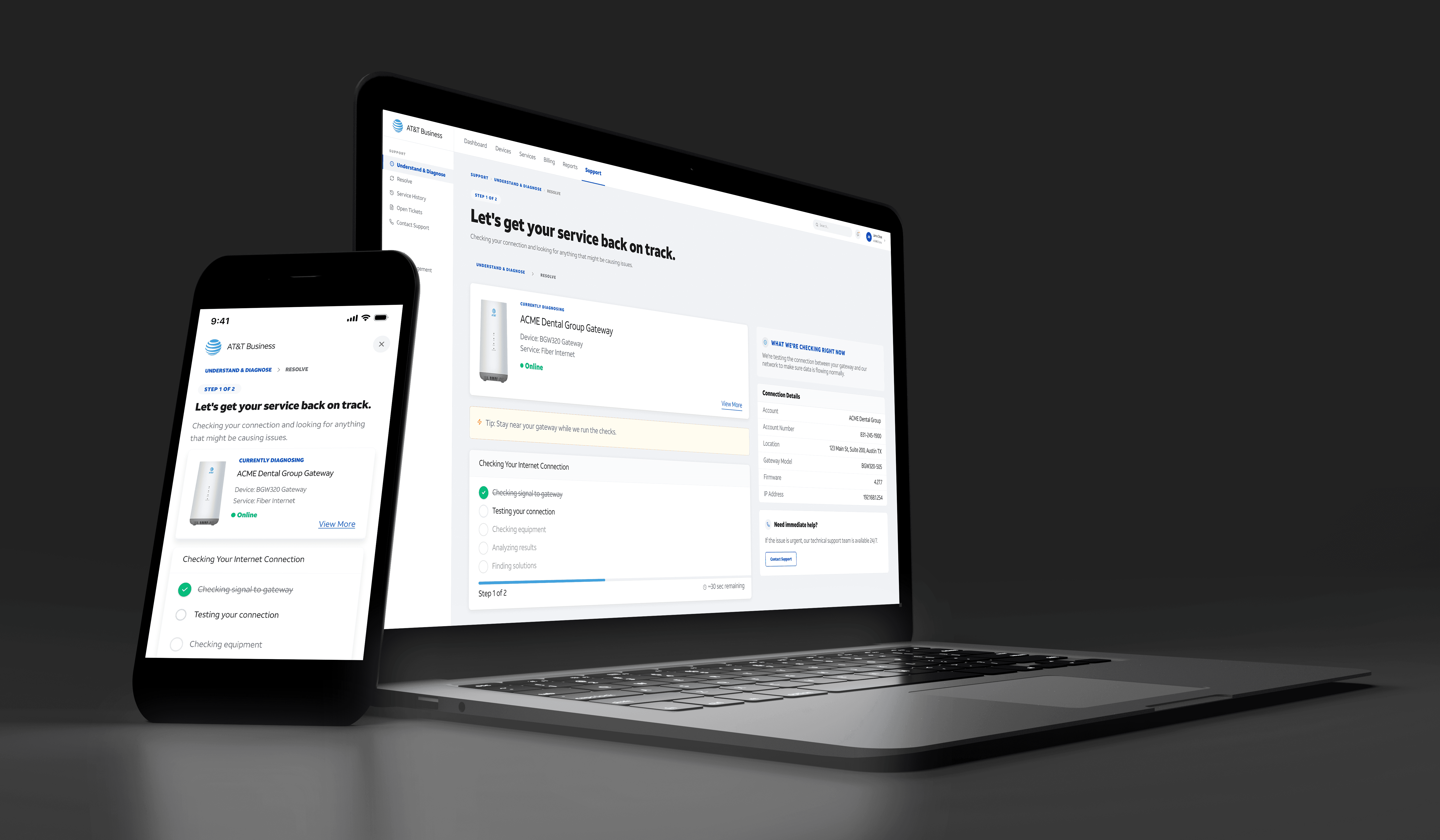
01
PROJECT OVERVIEW
Troubleshooting technical issues as a customer is already stressful.
The existing diagnostic experience often made that stress worse for AT&T Business customers.
The ambition extended far beyond launching another chatbot. The team needed a scalable framework that could connect diagnostics, knowledge articles, AI assistance, and customer support into a cohesive experience.
At the same time, AT&T's troubleshooting experiences spanned multiple products, brands, and support channels, leading many customers to abandon troubleshooting and contact support directly.
My Role
I led the research, experience design, and high-level solution architecture for the new troubleshooting framework, partnering with Product, Engineering, ServiceNow stakeholders, researchers, and technical SMEs to shape both the customer experience and the foundation for future support experiences.
Incident Management - Before

01
PROJECT OVERVIEW
Troubleshooting technical issues as a customer is already stressful.
The existing diagnostic experience often made that stress worse for AT&T Business customers.
The ambition extended far beyond launching another chatbot. The team needed a scalable framework that could connect diagnostics, knowledge articles, AI assistance, and customer support into a cohesive experience.
At the same time, AT&T's troubleshooting experiences spanned multiple products, brands, and support channels, leading many customers to abandon troubleshooting and contact support directly.
My Role
I led the research, experience design, and high-level solution architecture for the new troubleshooting framework, partnering with Product, Engineering, ServiceNow stakeholders, researchers, and technical SMEs to shape both the customer experience and the foundation for future support experiences.
Deals Page - Before

01
PROJECT OVERVIEW
Troubleshooting technical issues as a customer is already stressful.
The existing diagnostic experience often made that stress worse for AT&T Business customers.
The ambition extended far beyond launching another chatbot. The team needed a scalable framework that could connect diagnostics, knowledge articles, AI assistance, and customer support into a cohesive experience.
At the same time, AT&T's troubleshooting experiences spanned multiple products, brands, and support channels, leading many customers to abandon troubleshooting and contact support directly.
My Role
I led the research, experience design, and high-level solution architecture for the new troubleshooting framework, partnering with Product, Engineering, ServiceNow stakeholders, researchers, and technical SMEs to shape both the customer experience and the foundation for future support experiences.
Deals Page - Before
01
PROJECT OVERVIEW
Troubleshooting technical issues as a customer is already stressful.
The existing diagnostic experience often made that stress worse for AT&T Business customers.
The ambition extended far beyond launching another chatbot. The team needed a scalable framework that could connect diagnostics, knowledge articles, AI assistance, and customer support into a cohesive experience.
At the same time, AT&T's troubleshooting experiences spanned multiple products, brands, and support channels, leading many customers to abandon troubleshooting and contact support directly.
My Role
I led the research, experience design, and high-level solution architecture for the new troubleshooting framework, partnering with Product, Engineering, ServiceNow stakeholders, researchers, and technical SMEs to shape both the customer experience and the foundation for future support experiences.
Incident Management - Before
02
APPROACH & USER RESEARCH
The team's initial hypothesis was that improving AI and diagnostic capabilities would increase self-service adoption.
Before fully incorporating AI though, I wanted to understand why customers weren't using self-service.
Research Methods
Customer interviews
Internal agent interviews
Journey mapping
Technical documentation audits
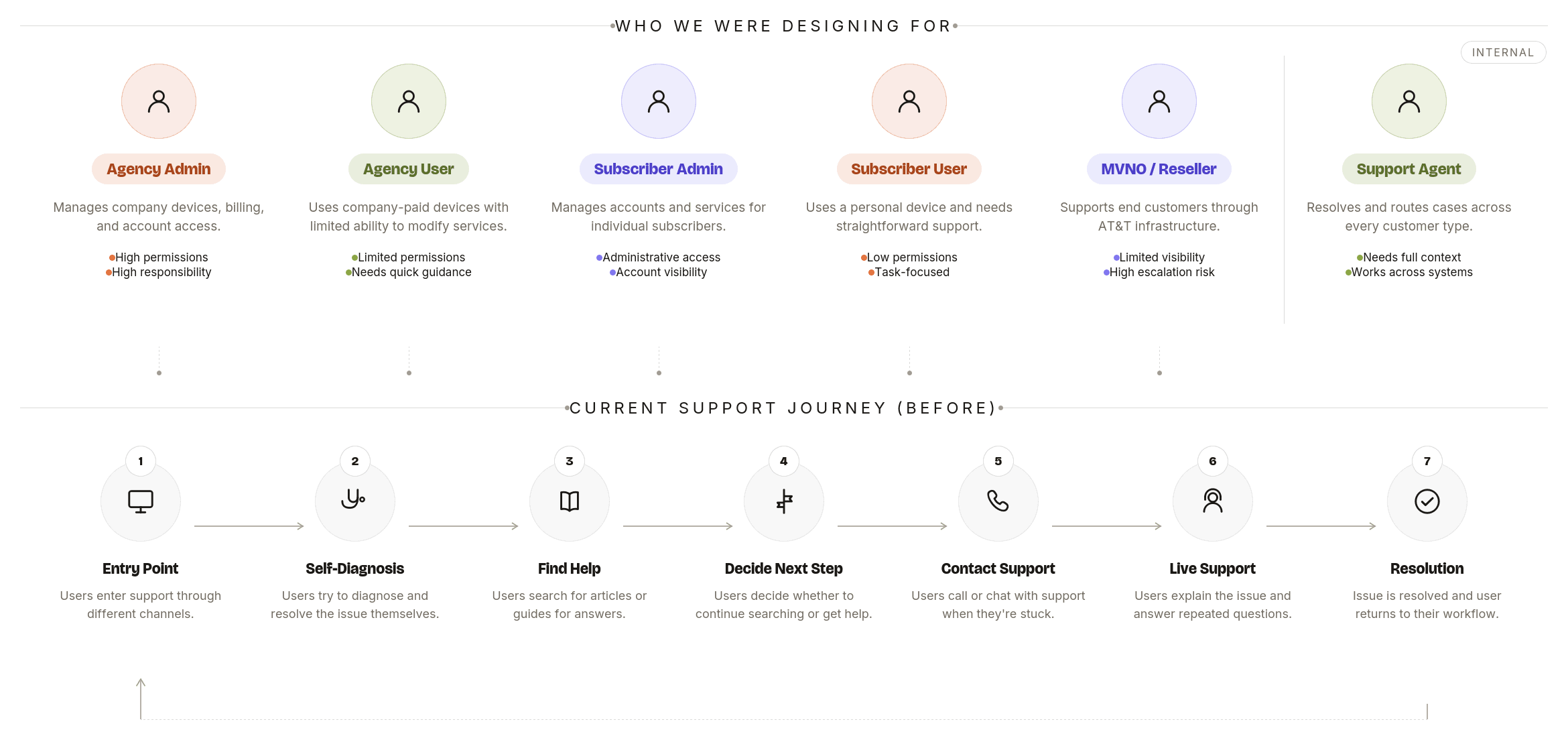
After thorough user research, my hypothesis shifted. AI wasn't enough. The problem wasn't intelligence. It was trust.
After thorough user research, my hypothesis shifted. AI wasn't enough. The problem wasn't intelligence. It was trust.
After thorough user research, my hypothesis shifted. AI wasn't enough. The problem wasn't intelligence. It was trust.
After thorough user research, my hypothesis shifted. AI wasn't enough. The problem wasn't intelligence. It was trust.
02
APPROACH & USER RESEARCH
The team's initial hypothesis was that improving AI and diagnostic capabilities would increase self-service adoption.
Before fully incorporating AI though, I wanted to understand why customers weren't using self-service.
Heuristic Evaluations
Research Methods
Customer interviews
Internal agent interviews
Journey mapping
Technical documentation audits
Usability Studies
CRO & Behavioral Analytics
After thorough user research, my hypothesis shifted. AI wasn't enough. The problem wasn't intelligence. It was trust.
Everything competes equally for attention.
Pricing lacks hierarchy; no anchor for value comparison
Promotions blended together visually
Deals Page


What’s included?
How does this deal compare to others?
Deal Builder

Comparing deals required memory
Users had to open each builder to understand what’s included
02
APPROACH & USER RESEARCH
The team's initial hypothesis was that improving AI and diagnostic capabilities would increase self-service adoption.
Before fully incorporating AI though, I wanted to understand why customers weren't using self-service.
Heuristic Evaluations
Research Methods
Customer interviews
Internal agent interviews
Journey mapping
Technical documentation audits
Usability Studies
CRO & Behavioral Analytics
After thorough user research, my hypothesis shifted. AI wasn't enough. The problem wasn't intelligence. It was trust.
Everything competes equally for attention.
Pricing lacks hierarchy; no anchor for value comparison
Promotions blended together visually
Deals Page
What’s included?
Back and forth
repeatedly
Customer taps to open deal
How does this deal compare to others?
Deal Builder
Comparing deals required memory
Users had to open each builder to understand what’s included
03
THE CHALLENGE
Customers didn't abandon troubleshooting because recommendations were inaccurate.
They abandoned it because they couldn't understand what the system was doing, why it was asking certain questions, or whether it was actually helping. That insight completely changed the direction.
Trust matters more than accuracy.
Every dead end reduced confidence in self-service, increasing live support volume and operational costs.
Invisible Progress
Users couldn't tell whether diagnostics were actually running, creating uncertainty during long wait states.
Technical Guidance
Help content was inconsistent, highly technical, and difficult to discover, making self-service unreliable.
Research Findings
03
THE CHALLENGE
Customers didn't abandon troubleshooting because recommendations were inaccurate.
They abandoned it because they couldn't understand what the system was doing, why it was asking certain questions, or whether it was actually helping. That insight completely changed the direction.
Trust matters more than accuracy.
Every dead end reduced confidence in self-service, increasing live support volume and operational costs.
Invisible Progress
Users couldn't tell whether diagnostics were actually running, creating uncertainty during long wait states.
Technical Guidance
Help content was inconsistent, highly technical, and difficult to discover, making self-service unreliable.
Bento Box

Carousel Prominence

Deal Propensity + Merchandising
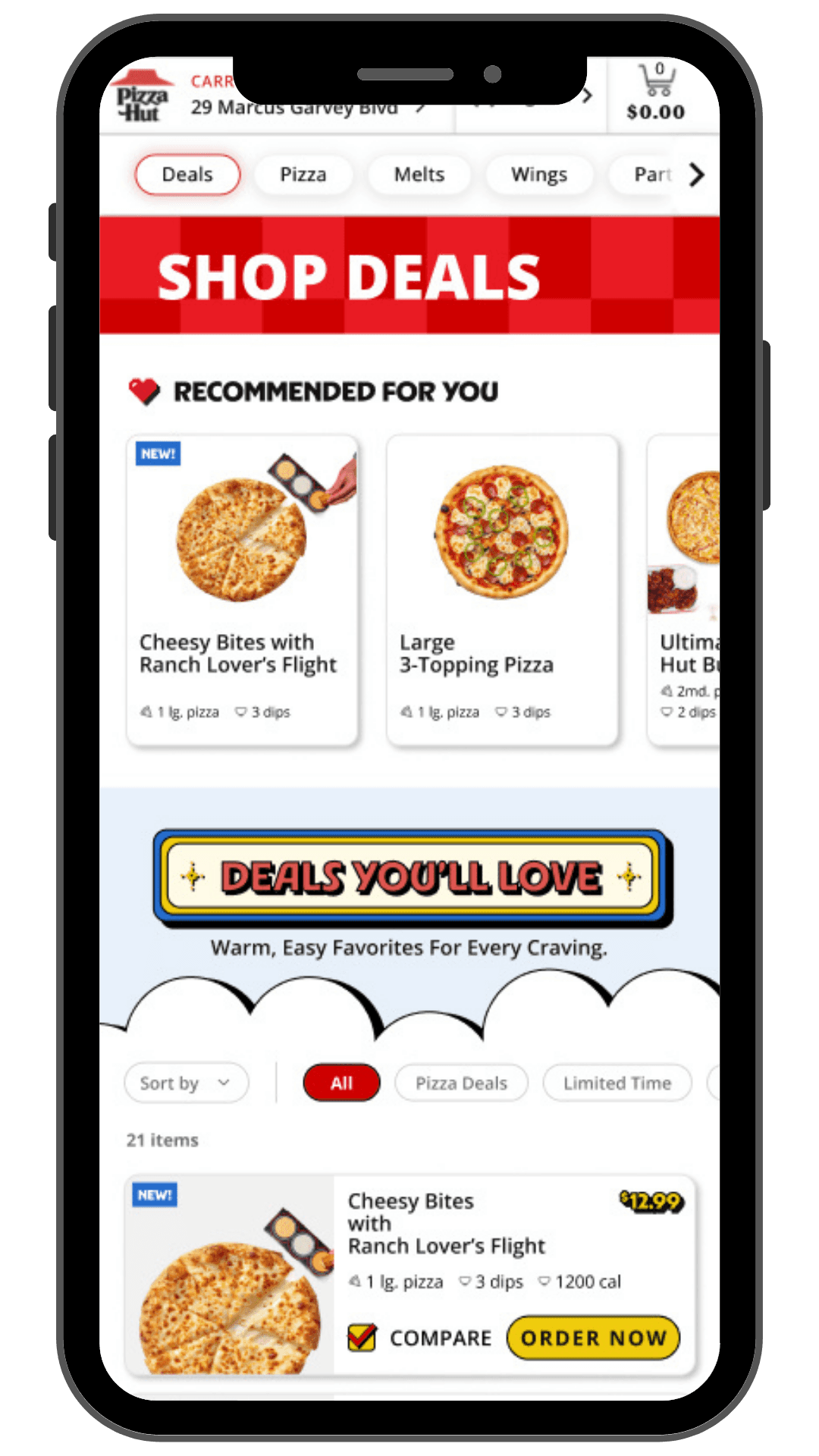
03
THE CHALLENGE
Customers didn't abandon troubleshooting because recommendations were inaccurate.
They abandoned it because they couldn't understand what the system was doing, why it was asking certain questions, or whether it was actually helping. That insight completely changed the direction.
Trust matters more than accuracy.
Every dead end reduced confidence in self-service, increasing live support volume and operational costs.
Invisible Progress
Users couldn't tell whether diagnostics were actually running, creating uncertainty during long wait states.
Technical Guidance
Help content was inconsistent, highly technical, and difficult to discover, making self-service unreliable.
Bento Box
Carousel Prominence
Deal Propensity + Merchandising
03
THE CHALLENGE
Customers didn't abandon troubleshooting because recommendations were inaccurate.
They abandoned it because they couldn't understand what the system was doing, why it was asking certain questions, or whether it was actually helping. That insight completely changed the direction.
Trust matters more than accuracy.
Every dead end reduced confidence in self-service, increasing live support volume and operational costs.
Invisible Progress
Users couldn't tell whether diagnostics were actually running, creating uncertainty during long wait states.
Technical Guidance
Help content was inconsistent, highly technical, and difficult to discover, making self-service unreliable.
Research Findings
Project Overview
Approach & Research
Challenge
Execution
Results
Reflection
04
THE PIVOT
I Stopped Designing solely AI.
I Started Designing Trust.
Research revealed that the real challenge wasn't AI capability - it was a lack of trust in the self-service experience.

New Design Framework
That shift repositioned AI from the centerpiece of the experience to one component within a broader support ecosystem.
04
THE PIVOT
I Stopped Designing solely AI.
I Started Designing Trust.
Research revealed that the real challenge wasn't AI capability - it was a lack of trust in the self-service experience.
Instead of asking,
How might AI improve troubleshooting?
I asked,
How might AI help customers feel confident enough in the experience to solve problems themselves?
That shift repositioned AI from the centerpiece of the experience to one component within a broader support ecosystem.
04
THE PIVOT
I Stopped Designing solely AI.
I Started Designing Trust.
Research revealed that the real challenge wasn't AI capability - it was a lack of trust in the self-service experience.
New Design Framework
That shift repositioned AI from the centerpiece of the experience to one component within a broader support ecosystem.
05
EXECUTION
Phase 1: Foundation
Designing a Framework for Trust
Instead of iterating on a single interface, I explored multiple concepts that worked together to build confidence throughout the troubleshooting journey.
Visibility
Making system activity understandable through progress indicators, wait states, and feedback loops.

Do
Show clear progress and what's happening

DoN'T
Avoid indefinite waiting
Knowledge in Context
Surfacing relevant documentation inside the troubleshooting journey instead of sending users to a separate knowledge base.
Do
Deliver the right help, in the flow

DoN'T
Avoid context switching
Knowledge in Context
Surfacing relevant documentation inside the troubleshooting journey instead of sending users to a separate knowledge base.
Do
Provide relevant, transparent guidance

DoN'T
Avoid generic, low-value suggestions
AI-Assisted Guidance
Providing intelligent recommendations with reasoning and next steps that feel actionable and trustworthy.
Do
Pass context and history to the agent
DoN'T
Avoid starting over
Trust at Every Step
Building confidence through clarity, consistency, and transparency at every moment of the journey.
Do
Pass context and history to the agent
DoN'T
Avoid starting over
05
EXECUTION
Phase 1: Foundation
Designing a Framework for Trust
Instead of iterating on a single interface, I explored multiple concepts that worked together to build confidence throughout the troubleshooting journey.
Visibility
Making system activity understandable through progress indicators, wait states, and feedback loops.
Knowledge in Context
Surfacing relevant documentation inside the troubleshooting journey instead of sending users to a separate knowledge base.
AI-Assisted Guidance
Providing intelligent recommendations with reasoning and next steps that feel actionable and trustworthy.
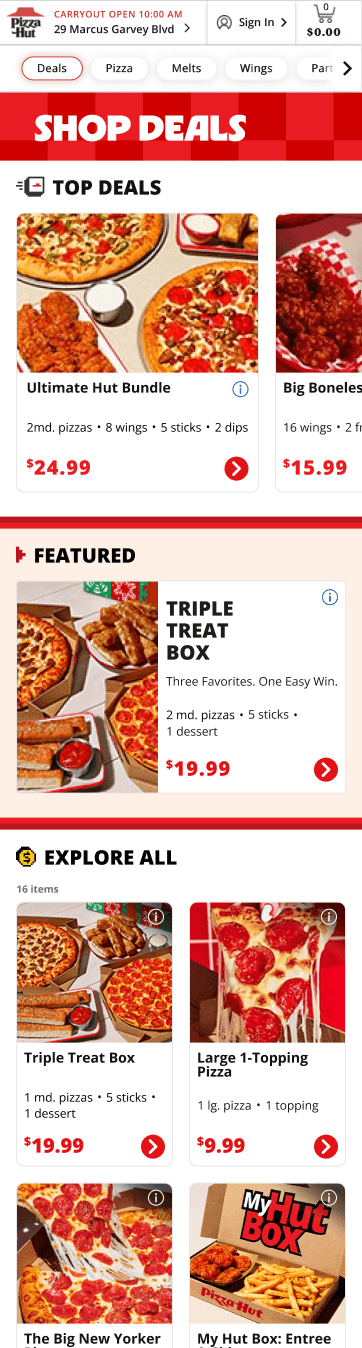
Winning Variant
A
Featured-first hierarchy

Prioritized high-value offers with clearer hierarchy and deal summaries to improve first-glance comprehension.
B
Discovery-led browsing

Prioritized horizontal exploration and exploratory interaction patterns.
C
High-density comparison

Increased browsing breadth through a denser scanning (double column) layout.
D
Hybrid discovery system
Combined carousel exploration with higher-density browsing behavior.
05
EXECUTION
Phase 1: Foundation
Designing a Framework for Trust
Instead of iterating on a single interface, I explored multiple concepts that worked together to build confidence throughout the troubleshooting journey.
Visibility
Making system activity understandable through progress indicators, wait states, and feedback loops.
Do
Show clear progress and what's happening
DoN'T
Avoid indefinite waiting
Knowledge in Context
Surfacing relevant documentation inside the troubleshooting journey instead of sending users to a separate knowledge base.
Do
Deliver the right help, in the flow
DoN'T
Avoid context switching
Knowledge in Context
Surfacing relevant documentation inside the troubleshooting journey instead of sending users to a separate knowledge base.
Do
Provide relevant, transparent guidance
DoN'T
Avoid generic, low-value suggestions
AI-Assisted Guidance
Providing intelligent recommendations with reasoning and next steps that feel actionable and trustworthy.
Do
Pass context and history to the agent
DoN'T
Avoid starting over
Trust at Every Step
Building confidence through clarity, consistency, and transparency at every moment of the journey.
Do
Pass context and history to the agent
DoN'T
Avoid starting over
06
RESULTS
Building the Foundation for AI-Assisted Support
The project evolved beyond improving a single troubleshooting flow.
It established reusable interaction patterns that informed AT&T Business's emerging Incident Management ecosystem within ServiceNow.
Before

After
Reduction in unnecessary live support escalation escalations.
Potential annual savings of $1.2M - $2.4M at enterprise scale
Reduction in unnecessary live support escalation escalations.
Potential annual savings of $1.2M - $2.4M at enterprise scale
Reduction in unnecessary live support escalation escalations.
Potential annual savings of $1.2M - $2.4M at enterprise scale
Reduction in unnecessary live support escalation escalations.
Potential annual savings of $1.2M - $2.4M at enterprise scale
Reduction in unnecessary live support escalation escalations.
Potential annual savings of $1.2M - $2.4M at enterprise scale
Impact beyond Phase 1
The experiment established an experimentation framework the team could build on. Each following phase introduced one new behavioral hypothesis while preserving what had already been validated.
07
WHAT'S NEXT
A Foundation for Future AI Experiences
The framework was intentionally designed to evolve alongside AT&T Business's growing AI capabilities.
Future opportunities included:
Personalized troubleshooting experiences
AI-powered knowledge retrieval
Predictive issue detection
Smarter customer-to-agent handoffs
Expansion across additional ServiceNow products
Because the foundation emphasized reusable patterns over point solutions, new capabilities could be introduced without redesigning the entire experience.
Phase 1 -> Done
Phase 3
Phase 4
Phase 5
08
REFLECTION
AI doesn't inherently create trust. Good experiences do.
This project changed the way I think about AI in product design.
The biggest challenge wasn't making AI smarter.
It was understanding where AI added value, and where thoughtful interaction design, clear communication, and human-centered content mattered more.
By designing AI as a guide rather than the destination, we created a framework that customers could understand, teams could scale, and future products could build upon.
THINGS I BELIEVE NOW
02
APPROACH & USER RESEARCH
The team's initial hypothesis was that improving AI and diagnostic capabilities would increase self-service adoption.
Before fully incorporating AI though, I wanted to understand why customers weren't using self-service.
Everything competes equally for attention.
Users must open each builder to understand what’s included
Pricing lacks hierarchy; no anchor for value comparison
02
Tap to open deal
02
Back and forth
repeatedly
What’s
included?
Is this actually
a better deal?
How does it compare?
?
Users had to open multiple builders just to answer simple questions.
Research Methods
Customer interviews
Internal agent interviews
Journey mapping
Technical documentation audits
INITIAL HYPOTHESIS
Body
03
THE CHALLENGE
Customers didn't abandon troubleshooting because recommendations were inaccurate.
They abandoned it because they couldn't understand what the system was doing, why it was asking certain questions, or whether it was actually helping. That insight completely changed the direction.
Trust matters more than accuracy.
Every dead end reduced confidence in self-service, increasing live support volume and operational costs.
The concepts generated excitement but not measurable learning.
Each redesign introduced too many variants to test.
Impossible to isolate what actually drives results.
THE REFRAME
Body
Large Hero
Bento
Carousel
Deal Propensity
04
THE PIVOT
I Stopped Designing solely AI.
I Started Designing Trust.
Research revealed that the real challenge wasn't AI capability - it was a lack of trust in the self-service experience.
Instead of asking,
How might AI improve troubleshooting?
I asked,
How might AI help customers feel confident enough in the experience to solve problems themselves?
That shift repositioned AI from the centerpiece of the experience to one component within a broader support ecosystem.
Title
05
EXECUTION
Phase 1: Foundation
Designing a Framework for Trust
Instead of iterating on a single interface, I explored multiple concepts that worked together to build confidence throughout the troubleshooting journey.
Winning Variant
A
Featured-first hierarchy
Prioritized high-value offers with clearer hierarchy and deal summaries to improve first-glance comprehension.
B
Discovery-led browsing
Prioritized horizontal exploration and exploratory interaction patterns.
C
High-density comparison
Increased browsing breadth through a denser scanning (double column) layout.
D
Hybrid discovery system
Combined carousel exploration with higher-density browsing behavior.
Visibility
Making system activity understandable through progress indicators, wait states, and feedback loops.
Knowledge in Context
Surfacing relevant documentation inside the troubleshooting journey instead of sending users to a separate knowledge base.
AI-Assisted Guidance
Providing intelligent recommendations with reasoning and next steps that feel actionable and trustworthy.
A Foundation for Future AI Experiences
The framework was intentionally designed to evolve alongside AT&T Business's growing AI capabilities.
Future opportunities included:
Personalized troubleshooting experiences
AI-powered knowledge retrieval
Predictive issue detection
Smarter customer-to-agent handoffs
Expansion across additional ServiceNow products
Because the foundation emphasized reusable patterns over point solutions, new capabilities could be introduced without redesigning the entire experience.
Winning Variant
A
Featured-first hierarchy
Prioritized high-value offers with clearer hierarchy and deal summaries to improve first-glance comprehension.
B
Discovery-led browsing
Prioritized horizontal exploration and exploratory interaction patterns.
C
High-density comparison
Increased browsing breadth through a denser scanning (double column) layout.
D
Hybrid discovery system
Combined carousel exploration with higher-density browsing behavior.
Visibility
Making system activity understandable through progress indicators, wait states, and feedback loops.
Knowledge in Context
Surfacing relevant documentation inside the troubleshooting journey instead of sending users to a separate knowledge base.
AI-Assisted Guidance
Providing intelligent recommendations with reasoning and next steps that feel actionable and trustworthy.
07
WHAT'S NEXT
Reduction in unnecessary live support escalation escalations.
Potential annual savings of $1.2M - $2.4M at enterprise scale
Reduction in diagnostic time
Faster issue resolution and less customer friction
Increase in customer confidence
Based on early usability testing and sentiment data
Building the Foundation for AI-Assisted Support
The project evolved beyond improving a single troubleshooting flow.
It established reusable interaction patterns that informed AT&T Business's emerging Incident Management ecosystem within ServiceNow.
06
PHASE 1 RESULTS
Title
Key Insights
AI doesn't inherently create trust. Good experiences do.
This project changed the way I think about AI in product design.
The biggest challenge wasn't making AI smarter.
It was understanding where AI added value, and where thoughtful interaction design, clear communication, and human-centered content mattered more.
By designing AI as a guide rather than the destination, we created a framework that customers could understand, teams could scale, and future products could build upon.
THINGS I BELIEVE NOW
08
REFLECTION
02
APPROACH & USER RESEARCH
The team's initial hypothesis was that improving AI and diagnostic capabilities would increase self-service adoption.
Before fully incorporating AI though, I wanted to understand why customers weren't using self-service.
Everything competes equally for attention.
Users must open each builder to understand what’s included
Pricing lacks hierarchy; no anchor for value comparison
02
Tap to open deal
02
Back and forth
repeatedly
What’s
included?
Is this actually
a better deal?
How does it compare?
?
Users had to open multiple builders just to answer simple questions.
Research Methods
Customer interviews
Internal agent interviews
Journey mapping
Technical documentation audits
INITIAL HYPOTHESIS
Body
03
THE CHALLENGE
Customers didn't abandon troubleshooting because recommendations were inaccurate.
They abandoned it because they couldn't understand what the system was doing, why it was asking certain questions, or whether it was actually helping. That insight completely changed the direction.
Trust matters more than accuracy.
Every dead end reduced confidence in self-service, increasing live support volume and operational costs.
The concepts generated excitement but not measurable learning.
Each redesign introduced too many variants to test.
Impossible to isolate what actually drives results.
THE REFRAME
Body
Large Hero
Bento
Carousel
Deal Propensity
04
THE PIVOT
I Stopped Designing solely AI.
I Started Designing Trust.
Research revealed that the real challenge wasn't AI capability - it was a lack of trust in the self-service experience.
Instead of asking,
How might AI improve troubleshooting?
I asked,
How might AI help customers feel confident enough in the experience to solve problems themselves?
That shift repositioned AI from the centerpiece of the experience to one component within a broader support ecosystem.
Title
05
EXECUTION
Phase 1: Foundation
Designing a Framework for Trust
Instead of iterating on a single interface, I explored multiple concepts that worked together to build confidence throughout the troubleshooting journey.
Winning Variant
A
Featured-first hierarchy
Prioritized high-value offers with clearer hierarchy and deal summaries to improve first-glance comprehension.
B
Discovery-led browsing
Prioritized horizontal exploration and exploratory interaction patterns.
C
High-density comparison
Increased browsing breadth through a denser scanning (double column) layout.
D
Hybrid discovery system
Combined carousel exploration with higher-density browsing behavior.
Visibility
Making system activity understandable through progress indicators, wait states, and feedback loops.
Knowledge in Context
Surfacing relevant documentation inside the troubleshooting journey instead of sending users to a separate knowledge base.
AI-Assisted Guidance
Providing intelligent recommendations with reasoning and next steps that feel actionable and trustworthy.
A Foundation for Future AI Experiences
The framework was intentionally designed to evolve alongside AT&T Business's growing AI capabilities.
Future opportunities included:
Personalized troubleshooting experiences
AI-powered knowledge retrieval
Predictive issue detection
Smarter customer-to-agent handoffs
Expansion across additional ServiceNow products
Because the foundation emphasized reusable patterns over point solutions, new capabilities could be introduced without redesigning the entire experience.
Winning Variant
A
Featured-first hierarchy
Prioritized high-value offers with clearer hierarchy and deal summaries to improve first-glance comprehension.
B
Discovery-led browsing
Prioritized horizontal exploration and exploratory interaction patterns.
C
High-density comparison
Increased browsing breadth through a denser scanning (double column) layout.
D
Hybrid discovery system
Combined carousel exploration with higher-density browsing behavior.
Visibility
Making system activity understandable through progress indicators, wait states, and feedback loops.
Knowledge in Context
Surfacing relevant documentation inside the troubleshooting journey instead of sending users to a separate knowledge base.
AI-Assisted Guidance
Providing intelligent recommendations with reasoning and next steps that feel actionable and trustworthy.
07
WHAT'S NEXT
Reduction in unnecessary live support escalation escalations.
Potential annual savings of $1.2M - $2.4M at enterprise scale
Reduction in diagnostic time
Faster issue resolution and less customer friction
Increase in customer confidence
Based on early usability testing and sentiment data
Building the Foundation for AI-Assisted Support
The project evolved beyond improving a single troubleshooting flow.
It established reusable interaction patterns that informed AT&T Business's emerging Incident Management ecosystem within ServiceNow.
06
PHASE 1 RESULTS
Title
Key Insights
AI doesn't inherently create trust. Good experiences do.
This project changed the way I think about AI in product design.
The biggest challenge wasn't making AI smarter.
It was understanding where AI added value, and where thoughtful interaction design, clear communication, and human-centered content mattered more.
By designing AI as a guide rather than the destination, we created a framework that customers could understand, teams could scale, and future products could build upon.
THINGS I BELIEVE NOW
08
REFLECTION
Next Project
X min.
X min.
X min.
X min.
X min.

Case Study 01
CRO
A/B Testing
Pizza Hut - Deals Page Optimization
Redesigned Pizza Hut's deals page to improve promotion discovery, deal comprehension, and increase conversion.
text
X min.
X min.
X min.
X min.
X min.
Case Study 01
SaaS UX
B2B
AT&T Business - AI Incident Management
Rebuilding trust in AI-assisted self-service support during AT&T Business's ServiceNow transformation.
text
X min.
X min.
X min.
X min.
X min.

Case Study 01
Agentic AI
Fashion Tech
Styllo - Agentic Wardrobe Assistant
Designing an AI-native personal styling platform that optimizes for better wardrobe decisions, not bigger shopping carts.
text
X min.
X min.
X min.
X min.
X min.

Case Study 01
Design Systems
Enterprise UX
Pizza Hut - Store Management System
Building the store operational system that enabled 6,800+ Pizza Hut restaurants to transition from a legacy platform to a modern operational ecosystem.
text
Next Project
X min.
X min.
X min.
X min.
X min.
Case Study 01
CRO
A/B Testing
Pizza Hut - Deals Page Optimization
Redesigned Pizza Hut's deals page to improve promotion discovery, deal comprehension, and increase conversion.
text
X min.
X min.
X min.
X min.
X min.
Case Study 01
SaaS UX
B2B
AT&T Business - AI Incident Management
Rebuilding trust in AI-assisted self-service support during AT&T Business's ServiceNow transformation.
text
X min.
X min.
X min.
X min.
X min.
Case Study 01
Agentic AI
Fashion Tech
Styllo - Agentic Wardrobe Assistant
Designing an AI-native personal styling platform that optimizes for better wardrobe decisions, not bigger shopping carts.
text
X min.
X min.
X min.
X min.
X min.
Case Study 01
Design Systems
Enterprise UX
Pizza Hut - Store Management System
Building the store operational system that enabled 6,800+ Pizza Hut restaurants to transition from a legacy platform to a modern operational ecosystem.
text
Next Project
X min.
X min.
X min.
X min.
X min.
Case Study 01
CRO
A/B Testing
Pizza Hut - Deals Page Optimization
Redesigned Pizza Hut's deals page to improve promotion discovery, deal comprehension, and increase conversion.
text
X min.
X min.
X min.
X min.
X min.
Case Study 01
SaaS UX
B2B
AT&T Business - AI Incident Management
Rebuilding trust in AI-assisted self-service support during AT&T Business's ServiceNow transformation.
text
X min.
X min.
X min.
X min.
X min.
Case Study 01
Agentic AI
Fashion Tech
Styllo - Agentic Wardrobe Assistant
Designing an AI-native personal styling platform that optimizes for better wardrobe decisions, not bigger shopping carts.
text
X min.
X min.
X min.
X min.
X min.
Case Study 01
Design Systems
Enterprise UX
Pizza Hut - Store Management System
Building the store operational system that enabled 6,800+ Pizza Hut restaurants to transition from a legacy platform to a modern operational ecosystem.
text
Next Project
X min.
X min.
X min.
X min.
X min.
Case Study 01
CRO
A/B Testing
Pizza Hut - Deals Page Optimization
Redesigned Pizza Hut's deals page to improve promotion discovery, deal comprehension, and increase conversion.
text
X min.
X min.
X min.
X min.
X min.
Case Study 01
SaaS UX
B2B
AT&T Business - AI Incident Management
Rebuilding trust in AI-assisted self-service support during AT&T Business's ServiceNow transformation.
text
X min.
X min.
X min.
X min.
X min.
Case Study 01
Agentic AI
Fashion Tech
Styllo - Agentic Wardrobe Assistant
Designing an AI-native personal styling platform that optimizes for better wardrobe decisions, not bigger shopping carts.
text
X min.
X min.
X min.
X min.
X min.
Case Study 01
Design Systems
Enterprise UX
Pizza Hut - Store Management System
Building the store operational system that enabled 6,800+ Pizza Hut restaurants to transition from a legacy platform to a modern operational ecosystem.
text